
Beyond the Crash Test: The Importance of Ergonomics in Age Series Baby Car Seats
2026-03-26
Why Does Ergonomics Directly Influence Real-World Safety Performance?
In regulated markets such as the European Union and North America, compliance with ECE R129 i-Size and FMVSS 213 standards is considered the minimum entry requirement for child restraint systems. However, in industry practice, certified safety performance does not always translate into consistent real-world protection.
Ergonomic design directly improves correct usage rates in daily scenarios. When a seat supports natural posture and reduces discomfort, caregivers are more likely to secure harness systems properly and maintain recommended seating positions. This is a critical factor often overlooked when evaluating Age Series Baby Car Seats.
Based on our experience working with international distributors, misuse frequently occurs due to discomfort during longer journeys. At Ningbo Bewell Baby Products Manufacturing Co., Ltd., our factory evaluates seating geometry through repeated usability simulations, ensuring that spinal alignment and head positioning remain stable across different travel durations.
How Do Recline Angles and Rotation Systems Improve Everyday Handling Efficiency?
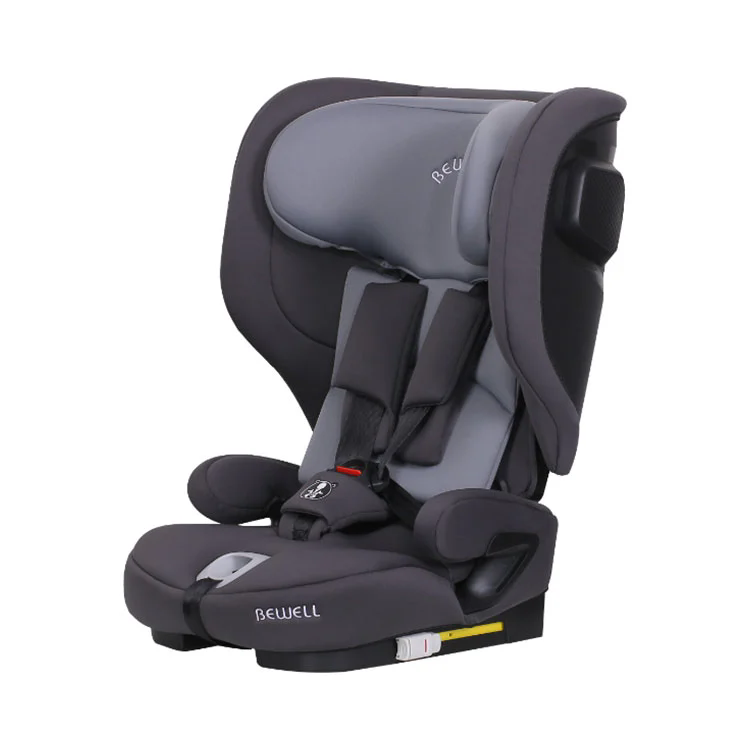
In real-world environments such as urban parking or multi-stop travel, ease of handling becomes a measurable safety factor. Age Series Baby Car Seats equipped with multi-position recline systems typically offer a range between 120° and 150°, allowing caregivers to adjust seating posture according to age and physical development.
A properly calibrated recline angle helps maintain airway openness in rear-facing infants, while also reducing pressure concentration on the lower spine. Improper angles, even within certified products, can lead to fatigue and increased movement during travel.
The integration of 360-degree rotation systems further improves usability. Our factory testing shows that rotational access reduces loading effort by a noticeable margin, especially in compact vehicles. This minimizes incorrect harness fastening, which is a common issue observed across multiple markets.
| Feature | Specification Range | Engineering Impact |
| Recline Angle | Approx. 120°–150° | Supports airway safety and posture stability |
| Rotation Function | 360-degree single-hand operation | Reduces loading errors in confined spaces |
| Locking Mechanism | Multi-point secure lock | Ensures consistent seat positioning |
| Installation System | ISOFIX with support leg | Improves installation accuracy and rigidity |
What Material Technologies Improve Thermal Comfort and Long-Term Usability?
Thermal comfort is a key variable affecting occupant behavior. In high-temperature regions or extended travel scenarios, poor ventilation can lead to restlessness, increasing the likelihood of incorrect seating posture.
Modern Age Series Baby Car Seats incorporate multi-layer breathable textile systems combined with internal airflow channels. These structures are designed to maintain consistent temperature distribution and reduce heat accumulation over time.
Our factory conducts controlled environment testing to evaluate airflow efficiency and moisture management. Materials are selected based on durability, breathability, and resistance to deformation under repeated use cycles. Ningbo Bewell Baby Products Manufacturing Co., Ltd. integrates these material technologies to ensure stable performance across different climate zones.
| Layer Type | Material Composition | Functional Role |
| Surface Fabric | Breathable polyester mesh | Air circulation and wear resistance |
| Comfort Padding | High-density foam | Pressure distribution and support |
| Structural Core | Energy-absorbing EPS | Impact force management |
| Ventilation Design | Integrated airflow channels | Heat dissipation during extended use |
How Does Ergonomic Structure Support Healthy Spinal Development?
In early childhood development, maintaining a neutral spine position is essential. Improper seating posture over extended periods can gradually affect musculoskeletal balance, particularly in infants with undeveloped support structures.
The structural design of Age Series Baby Car Seats incorporates adjustable headrests, lumbar zones, and side support elements to align with anthropometric data. These adjustments ensure that restraint systems remain proportional to the child’s growth stages.
Our factory design process emphasizes long-term usability rather than short-term compliance. Repeated adjustment cycles are tested to verify that support points remain effective after extended use. Bewell applies these principles to deliver consistent ergonomic performance across different vehicle interiors.
Why Is Ease of Use a Critical Factor in Achieving Certified Safety Outcomes?
A child restraint system can only perform as designed when used correctly. In industry observations, a significant percentage of misuse cases are linked to complex operation or unclear adjustment mechanisms.
Age Series Baby Car Seats are engineered with simplified interaction points, including one-hand harness adjustment, intuitive belt routing, and audible locking feedback. These features reduce operational errors and improve consistency in daily use.
Our factory evaluates user interaction through repeated scenario testing, identifying areas where misuse is most likely to occur. By optimizing these touchpoints, we ensure that safety systems are not only present but effectively utilized in real-world conditions.
FAQ: Beyond the Crash Test: The Importance of Ergonomics in Age Series Baby Car Seats
Q1: Why is ergonomics considered as important as crash performance?
A1: Ergonomics ensures that the seat is used correctly every time. A well-designed seat reduces discomfort, maintains proper posture, and minimizes user errors, which directly affects real-world safety outcomes beyond laboratory crash conditions.
Q2: What recline angle is generally recommended for infant safety?
A2: Rear-facing infant seats typically require a recline angle between 120° and 150° to maintain airway openness and reduce neck strain. Proper adjustment depends on the child’s size and should follow manufacturer guidelines.
Q3: How do breathable materials affect long-distance travel comfort?
A3: Breathable materials improve airflow and reduce heat buildup, helping maintain a stable seating environment. This reduces restlessness and supports consistent harness positioning during extended travel periods.
From a professional sourcing perspective, evaluating child restraint systems should go beyond certification labels. Products that combine ergonomic engineering with verified safety performance are more likely to deliver consistent results in real-world applications. Age Series Baby Car Seats represent a shift toward user-centered safety design, where comfort and usability directly support compliance.
For distributors and brand owners, selecting products with proven ergonomic features can reduce return rates and improve customer satisfaction. Our team continues to refine product structures based on market feedback and engineering validation.