
Vulcanizing Press Supplier Selection Guide for Rubber Manufacturers
2026-09-02
Every rubber manufacturer eventually learns the hard way: a vulcanizing press that drifts out of spec quietly sabotages cure consistency, cycle times, and your bottom line. Selecting the right supplier isn't a procurement formality—it's a strategic decision that separates reliable output from constant firefighting. This guide walks through the non-negotiable factors that matter on the production floor, and why SFC has become the benchmark many manufacturers trust.
Match Tonnage and Daylight to Your Largest Mold, Not Your Current Job
A common trap in injection molding is sizing your press to the mold sitting in front of you today. That mold might be a small connector or a thin-walled cup, and the machine you’re considering handles it without breaking a sweat. But the moment a new project lands with a mold that’s 20% taller or needs 150 extra tons of clamp force, you’re either turning down work or scrambling for outside capacity. Instead, take a hard look at the largest mold you expect to run over the next few years—the one with the deepest draw, the most cavities, or the widest tie-bar clearance requirements. Match your tonnage and daylight to that mold now, even if it means a little extra floor space or a few more dollars up front.
Ignoring this can quietly erode your flexibility. Say your current job needs 300 tons, but the mold you’re quoting for next quarter needs 500. If you buy the 300-ton press, the second mold simply won’t fit between the platens or the clamp won’t close without risking flash and damaged tooling. That’s not just a lost job; it’s a lost customer who now questions whether you can handle their growth. On the flip side, buying for your largest known mold means you can still run smaller jobs—you just use a smaller mold base or an adapter plate. The bigger press doesn’t punish you for under-utilizing clamp force, but a too-small press absolutely punishes you when that big mold shows up.
There’s also a practical detail people miss: daylight isn’t just about mold height. It’s about ejector stroke, core pulls, and room for automation like sprue pickers or end-of-arm tooling. If your largest mold needs 40 inches of daylight and you bought a press with 32, you can’t just “shim it.” The mold physically won’t open far enough to eject parts. So before you sign off on a machine, pull the drawings for every mold in your pipeline, add a few inches of buffer for safety, and then commit. Your largest mold isn’t your current job—it’s the one that will keep your shop busy when the small stuff dries up.
Probe the Supplier’s Custom Hydraulics and Control Logic Before Signing
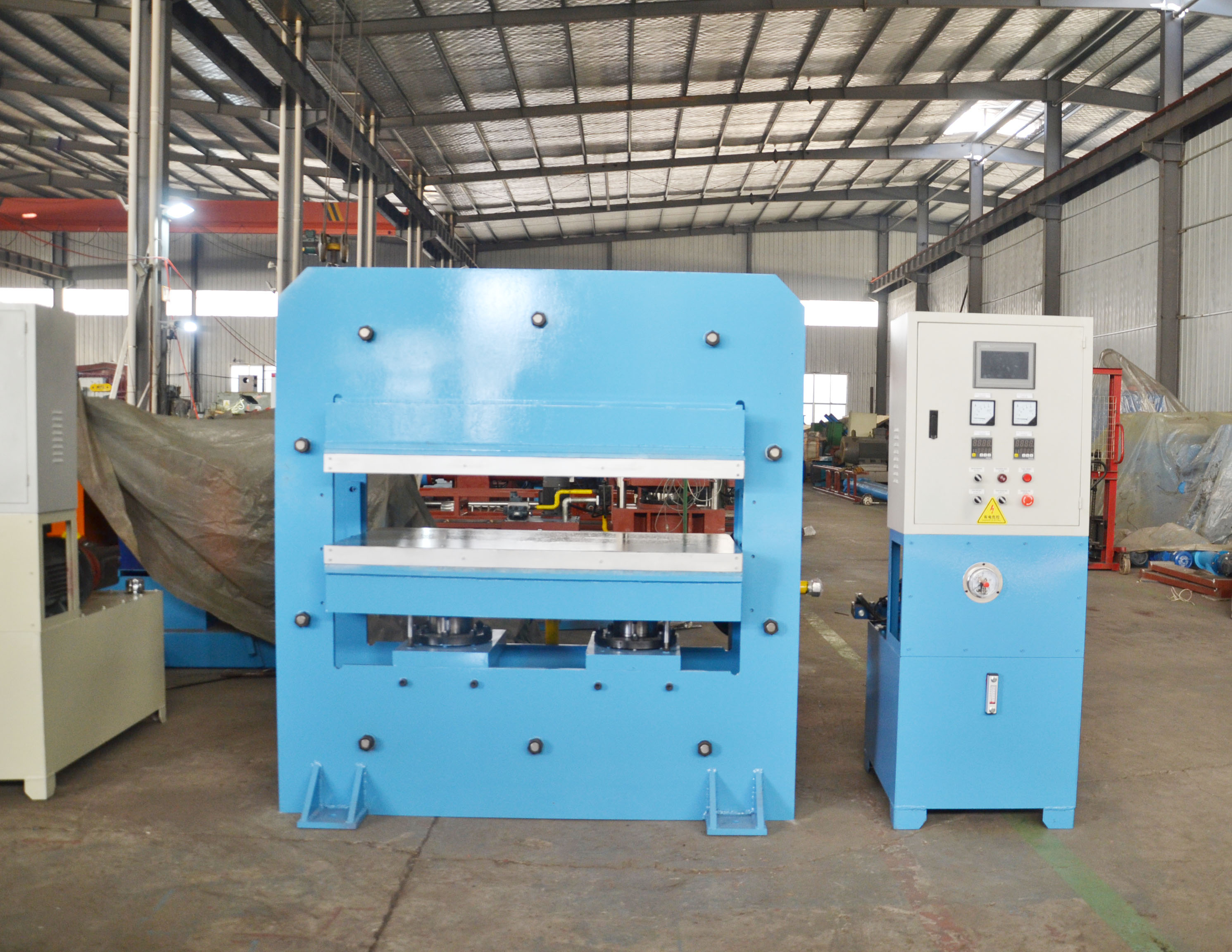
A spec sheet that only lists bore sizes and flow rates won't reveal how the system behaves when a cylinder deadheads or a proportional valve drifts out of calibration. Ask the supplier to walk you through the actual hydraulic schematic under fault conditions—what happens to pilot pressure if the load-sensing line ruptures, how the controller ramps pump displacement when multiple functions demand flow simultaneously, and which parameters are hard-coded versus field-tunable. If they can't produce a written control narrative or a recorded test run with real load cycles, treat that as a red flag, not a scheduling issue.
Dig into who owns the logic. Many suppliers ship a black box with proprietary firmware, which means every tweak to acceleration curves, pressure cutoffs, or interlock timing becomes a paid service call. Request a copy of the PLC or controller project file, or at minimum a read-only view of all adjustable registers. Ask whether the hydraulic valves are standard catalog items with published spool response curves, or custom-machined parts with long lead times and no second source. A supplier that hesitates to share component datasheets or insists on sole-source maintenance agreements is likely selling you a locked ecosystem, not a power unit.
Finally, have them demonstrate the control logic against your worst-case duty cycle, not their best-case demo. Run a simulated cold start, a blocked filter, a sensor unplugged mid-cycle, and a rapid direction reversal under full load. Watch how the code prioritizes pressure limits over speed commands. If the supplier starts explaining away oscillations or says the real machine will behave differently, that's exactly the kind of surprise you don't want after the purchase order is signed.
Compare Real Energy Use Per Cure Cycle, Not Just Nameplate Motor Power
Motor nameplate ratings tell you almost nothing about how much energy a UV curing system actually pulls during a full cure cycle. A lamp labeled 300 watts per inch might draw that briefly at startup, then sag under thermal load, or waste half its output as heat while the real curing dose comes from a narrow spectral band. If you fixate on the sticker, you miss the fact that two systems with identical nameplate power can differ by 30–40% in wall-plug energy per part cured.
The smarter metric is kilowatt-hours per cure cycle, measured at the mains with a proper power analyzer while running your actual coating, ink, or adhesive at production speed. Load the substrate, trigger the lamp, wait out the full exposure window including any standby or ramp-up, and log the cumulative draw for that single cycle. You'll often find that a lower-nameplate LED system beats a higher-nameplate arc lamp because the LED reaches full intensity in milliseconds, skips warm-up idle, and doesn't need a shutter or cooling delay between parts.
Don't trust vendor worksheets that assume 100% duty cycle or ideal irradiance uniformity. Ask for a side-by-side test on your line, with your chemistry, your belt speed, and your part geometry. Then compare the real energy per cure cycle—not the marketing number on the side of the power supply. The difference shows up on your electric bill within the first month, and it's the only figure that matters when you're trying to justify a retrofit or a new line.
Call Three Existing Users and Ask About Downtime, Not Just Delivery
Reach out to three current customers and steer the conversation toward real downtime events. Instead of asking if they're happy with delivery, ask them to recall the last time the service became unavailable—what triggered it, how long it lasted, and what it cost their team in lost momentum.
Listen for specifics: did a scheduled maintenance window ever stretch into an unplanned outage? How quickly did support acknowledge the issue? Existing users often carry vivid memories of a bad Tuesday morning, and those stories reveal more about reliability than any uptime percentage on a dashboard.
Try a simple prompt like asking them to describe a time the tool went down when they needed it most. The pause before they answer is often just as informative as the response itself.
Walk a Live Production Floor to Spot Oil Leaks and Safety Gaps
Oil rarely announces itself. It gathers in the seams of a gearbox, drips off a fitting that looked dry two shifts ago, or spreads into a faint rainbow under a pallet jack. On a live production floor, you need to move slowly enough to catch those signs before they become a slip hazard or a maintenance call. Start at the machines that run hottest and longest—hydraulic presses, compressors, indexing tables. Look for wet spots on the concrete, but also check the underside of drip trays, the backs of guards, and the joints where hoses meet metal. If a floor appears too clean, ask what was wiped up an hour ago.
Safety gaps often hide right next to the leaks. A missing machine guard lets a small drip become a spray. An unmarked step-over hose becomes a trip risk when someone carries a finished part. Walk the aisle with a floor supervisor and the newest operator at your side—the supervisor sees what has always been there, the new operator sees what should not be. Keep a checklist on your phone, but do not stare at it. Take photos of the same spots for a week; patterns emerge from a hose that is always wet on Wednesday mornings or a corner that stays dark despite the overhead LEDs.
The point is not to find every drop on the first pass. It is to train the floor to notice. Put a tag on a suspected leak, and watch whether anyone follows up in the next shift. Mark a puddle with floor tape, then remove the tape after the fix. When operators see that small observations lead to real changes, they start reporting the hiss of a cracked line before it becomes a pool. That kind of attention is what keeps a live floor safe, not a monthly audit that checks boxes from a clipboard.
Map Out Spare Parts Lead Times and Who Actually Answers at 2 a.m.
Start by pulling every spare part your equipment actually consumes—not the theoretical list from the manual. For each one, note the real-world lead time from your local supplier, the one who answers the phone when a machine goes down at 2 a.m., not the corporate hotline that puts you on hold. Call them now, confirm their after-hours number, and ask who takes the emergency calls on weekends. Write that name down next to the part number.
Then map out the failure patterns: which parts fail most often, which ones take three weeks to arrive, and which ones leave you completely stranded. Cross-reference that with the person who actually shows up with a replacement at midnight. If the answer is “nobody,” you’ve found your critical gap. Fix it by finding a second source, stocking a spare on the shelf, or making a friend at a machine shop who can fabricate a stopgap. This map isn’t a spreadsheet—it’s your lifeline when the line is down.
FAQ
Look beyond the catalog. A dependable supplier checks your existing mold setup, asks about your rubber compounds, and talks through cycle time goals before quoting anything. They should be willing to run a sample trial or connect you with current customers who use the same press size. If they hesitate on references or won't discuss failure modes, that's a red flag.
Start with your largest mold plus the recommended clearance for material flow and operator access. Tonnage is calculated from the projected area of the cavity times the specific pressure your compound needs—usually between 150 and 250 bar for most industrial rubber. Buy too small and you'll fight short shots and flash; buy too large and you waste energy every cycle. Always leave at least 15% margin for future product lines.
Platen temperature uniformity directly affects cure consistency. Cheap presses often have edge-to-center differences of 8°C or more, which means overcured edges or undercured centers on thick parts. Ask for a thermal map under load, not just on an empty platen. Also check how quickly the press recovers temperature after mold loading—slow recovery eats into cycle time.
Hydraulic seals, heating elements, and PLC components will fail eventually. You need a supplier who stocks spares locally or can ship within 48 hours, not one who quotes a 6-week lead time for a simple thermocouple. Ask about remote diagnostics, on-site training for your maintenance crew, and whether their service engineers understand rubber processing—not just generic machine repair.
Ask for cases involving similar hardness, filler loading, or cure systems. A supplier who has mainly built presses for shoe soles may struggle with high-temperature silicone or fluoroelastomer parts that need vacuum or bump cycles. Request a detailed process sheet from a past project. If they can't describe how they handled scorch prevention or degassing for a similar material, keep looking.
Foundation and rigging, hydraulic oil changes, energy consumption per cycle, and spare parts markups are the big ones. Some low-price presses require a special power supply or cooling water treatment that adds thousands upfront. Also check whether the control software license is a one-time fee or an annual subscription. A press that is 20% cheaper on paper can cost far more over five years.
If your products have unusual dimensions, need multiple daylight openings, or require special clamping patterns, customization is worth it. Standard presses force you to adapt your mold design, which can lead to uneven pressure distribution. But customization only pays off if you run that product family for at least five years. For small batches or contract work, a flexible standard press with quick mold change is usually smarter.
Don't just look at motor horsepower. Ask for specific energy consumption per kilogram of cured rubber under realistic cycle conditions. A well-insulated press with a modern hydraulic system and variable-speed pump can cut energy use by 30% or more compared to an older design. Also check standby power draw—many presses idle at full heater wattage between shifts. Some suppliers now offer energy monitoring built into the HMI, which makes verification straightforward.
Conclusion
But before you sign anything, match the press tonnage and daylight opening to your largest mold, not the job sitting on the floor today. Many buyers undersize because current orders fit, then six months later a bigger tool arrives and the entire line stalls. Ask suppliers to prove their custom hydraulics and control logic can handle the weird cycle times and multi-step pressure profiles you actually run, not just a standard catalog cycle. Energy use deserves the same scrutiny: request real kilowatt-hour readings per cure cycle from a live machine, not the motor nameplate. Two machines with identical horsepower can differ by thirty percent in practical consumption once heating, cooling, and idle losses are counted.
Then go beyond the brochure. Call three existing users—ideally ones who have run the same model for at least two years—and ask about unplanned downtime, not delivery date. A press that arrives on time but leaks oil after four months will cost more than a late one. Walk a live production floor and look for oil stains, missing guards, or awkward manual loading that invites injuries. Finally, map spare parts lead times for the pump, seals, PLC, and heater bands, and confirm who actually answers the phone at 2 a.m. when a cure cycle locks mid-stroke. If the answer is a ticket queue instead of a named engineer, keep looking.
Contact Us
Contact Person: Chen Zhengwei
Email: [email protected]
Tel/WhatsApp: +86-13963975727
Website: https://www.sfcrubbermachine.com