

How Do CNC Aerospace Parts Improve Precision, Reliability, and Customization?
2026-08-24
Aerospace manufacturing leaves little room for error. Components must combine dimensional accuracy, lightweight construction, mechanical strength, repeatability, and dependable performance under demanding operating conditions. This is why CNC Aerospace Parts have become an important solution for aircraft, UAV, aerospace equipment, and related precision systems. Modern CNC machining can produce complex geometries from materials such as aluminum, titanium, stainless steel, and other engineering materials, while supporting prototypes as well as small- and medium-volume production.
For manufacturers looking for a reliable production partner, BestPro Precision Manufacturing Co., Ltd. provides custom high-precision component manufacturing, including CNC milling, turning, 5-axis machining, prototyping, inspection, and secondary processing. BestPro states that it has served aerospace and other demanding industries since 2009, with drawing review and manufacturing support integrated into its workflow.
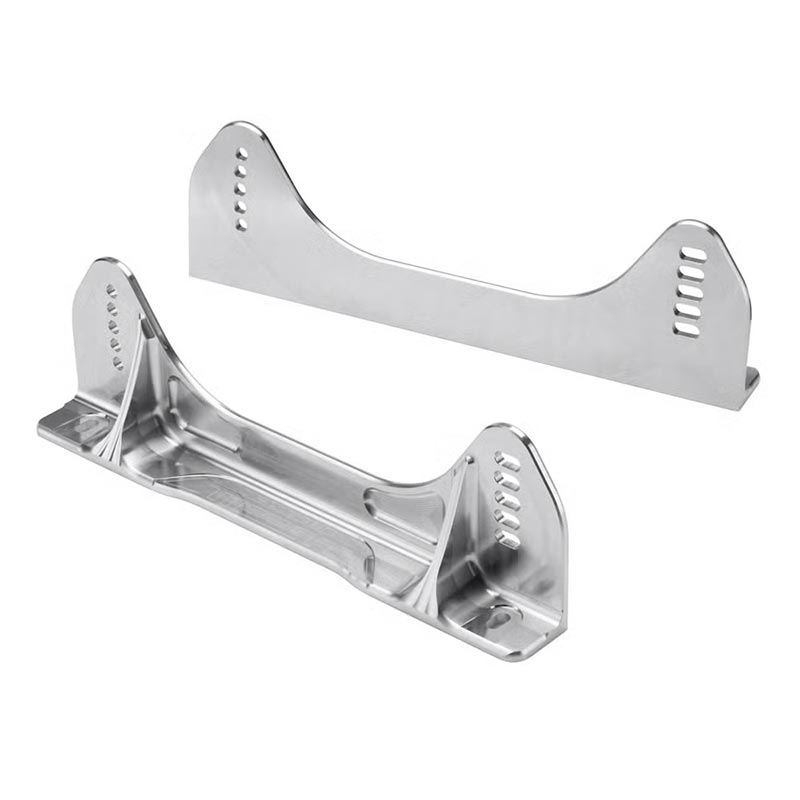
Why Are CNC Aerospace Parts Important?
Aerospace components often require more than basic machining. Critical features such as mounting holes, threads, pockets, curved surfaces, interfaces, and thin-wall structures must remain within specified dimensions so that individual components can fit accurately into larger assemblies.
The main value of CNC Aerospace Parts includes:
-
High dimensional precision for critical mating and mounting features
-
Repeatable production across multiple batches
-
Complex geometry machining for advanced aerospace designs
-
Material flexibility for lightweight and high-strength applications
-
Efficient prototyping for engineering validation
-
Custom manufacturing based on customer drawings and CAD files
Five-axis machining is especially useful when a component has multiple angled surfaces, curved profiles, deep pockets, or difficult-to-access areas because several surfaces can be machined with fewer setups.
What Do CNC Aerospace Parts Do?
CNC Aerospace Parts can serve structural, mechanical, electronic, and functional roles. Depending on the aircraft or aerospace system, typical components may include brackets, housings, mounting blocks, shafts, connectors, manifolds, structural plates, fixtures, and other precision-machined components.
| Part Type | Typical Function | Key Requirement |
|---|---|---|
| Aerospace Brackets | Structural support and mounting | Accuracy & strength |
| Housings | Protect sensors or electronic systems | Dimensional stability |
| Shafts & Bushings | Mechanical movement and alignment | Tight tolerances |
| Structural Plates | Assembly and load support | Lightweight design |
| Connectors | Component interface | Precise fitting |
| 5-Axis Components | Complex aerospace mechanisms | Geometry control |
The manufacturing objective is not simply to make a part—it is to produce a component that fits, functions, and remains consistent throughout its intended application.
How Does Customization Improve Aerospace Manufacturing?
One of the biggest advantages of CNC machining is customization. Aerospace engineers frequently work with unique designs, revised prototypes, special mounting interfaces, or application-specific geometries. Standard off-the-shelf components may not provide the required dimensions or performance.
BestPro can manufacture parts according to customer 2D drawings, 3D CAD files, material specifications, tolerances, quantities, and finishing requirements. Its manufacturing workflow starts with drawing review, including evaluation of tolerances, materials, and critical features before production.
Customization Benefits
-
Design freedom – Complex shapes can be manufactured directly from engineering drawings.
-
Prototype flexibility – Designs can be tested and refined before larger production runs.
-
Application-specific dimensions – Mounting holes, interfaces, threads, and profiles can be customized.
-
Material selection – Different materials can be selected according to strength, weight, corrosion resistance, and application requirements.
-
Production scalability – The same manufacturing partner can support development and subsequent production.
This is particularly valuable for aerospace companies that need components designed around a specific aircraft, UAV, testing system, or aerospace assembly.
Which Materials Are Suitable for CNC Aerospace Parts?
Material selection has a direct influence on component weight, strength, machinability, corrosion resistance, and service performance.
Common choices include:
-
Aluminum alloys: lightweight and suitable for many structural and housing applications.
-
Titanium alloys: excellent strength-to-weight characteristics and suitable for demanding aerospace applications.
-
Stainless steel: useful where strength and corrosion resistance are important.
-
Engineering plastics: suitable for selected lightweight, insulating, or non-structural applications.
-
High-performance alloys: appropriate for applications involving demanding thermal or mechanical conditions.
The correct material should always be selected according to the engineering specification rather than simply choosing the easiest material to machine.
CNC Aerospace Parts vs. Conventional Machining
| Feature | CNC Aerospace Parts | Conventional Machining |
|---|---|---|
| Precision | High and repeatable | More operator-dependent |
| Complex geometry | Excellent capability | More limited |
| Customization | Highly flexible | Often less efficient |
| Prototyping | Fast design iteration | Less flexible |
| Repeat production | Strong consistency | Can vary by process |
| Automation | High | Lower |
| Multi-axis machining | Available | Generally limited |
For aerospace applications, CNC machining offers an important combination of precision, repeatability, automation, and design flexibility.
What Is the Manufacturing Process?
A reliable CNC Aerospace Parts project typically involves several stages:
1. Drawing Review
Engineers examine the CAD model or technical drawing, paying particular attention to critical dimensions, tolerances, materials, and surface requirements.
2. Material Preparation
The specified material is selected and prepared according to the project requirements.
3. CNC Machining
Milling, turning, or 5-axis machining is selected according to the component's geometry.
4. Surface Treatment
Depending on the application, processes such as anodizing, passivation, polishing, plating, or other finishes may be applied.
5. Quality Inspection
Dimensions and critical features are checked against the approved specifications.
6. Delivery
After final inspection and packaging, finished components are prepared for delivery or integration into the customer's assembly.
How Does BestPro Support Aerospace Projects?
BestPro Precision Manufacturing Co., Ltd. focuses on turning engineering drawings into production-ready precision components. Its capabilities include CNC milling, CNC turning, 5-axis machining, prototyping, surface finishing, inspection, and other manufacturing services.
More importantly, BestPro emphasizes a custom manufacturing approach rather than forcing customers to choose from fixed component sizes. This makes it suitable for projects requiring special dimensions, complex geometries, customized interfaces, or application-specific aerospace components.
From prototype development to repeat production, the combination of engineering review, CNC machining, secondary operations, and quality inspection can help reduce communication gaps and maintain consistency.
What Results Can Customers Expect?
When CNC Aerospace Parts are manufactured with appropriate process planning and quality control, customers can benefit from:
-
Better dimensional consistency
-
More reliable assembly
-
Reduced manual finishing and adjustment
-
Improved repeatability between production batches
-
Greater freedom in aerospace component design
-
Faster transition from prototype to production
-
Customized components matched to specific equipment
For aerospace applications, these benefits can translate into smoother assembly, more predictable manufacturing, and greater confidence in the finished component.
FAQ
What are CNC Aerospace Parts?
CNC Aerospace Parts are precision-machined components manufactured using computer-controlled machining processes for aerospace and aviation-related applications. They can include brackets, housings, shafts, structural components, connectors, fixtures, and complex multi-axis parts.
Can CNC Aerospace Parts be fully customized?
Yes. CNC machining is well suited to custom aerospace components. Manufacturers can work from customer drawings or CAD files to produce components with specified dimensions, materials, tolerances, finishes, and geometries.
Does BestPro support prototypes?
Yes. BestPro provides prototyping and precision CNC manufacturing services, allowing customers to validate designs before moving toward larger production requirements.
Why is 5-axis machining useful for aerospace components?
5-axis machining can efficiently process complex curved surfaces, angled features, pockets, and multi-sided geometries while reducing the number of setups required.
Can BestPro manufacture aerospace parts according to customer drawings?
Yes. BestPro's workflow begins with reviewing customer drawings, tolerances, materials, and critical features before production.
Conclusion
High-performance aerospace manufacturing demands precision, consistency, engineering flexibility, and reliable customization. CNC Aerospace Parts provide an effective way to manufacture complex components while maintaining control over dimensions, materials, geometry, and production requirements.
For companies seeking a manufacturing partner capable of supporting customized aerospace components from prototype to production, BestPro Precision Manufacturing Co., Ltd. combines CNC machining, 5-axis capabilities, engineering review, secondary processing, and inspection to create solutions around each customer's specific requirements.
Whether you need a single prototype, a complex 5-axis component, or a recurring production order, contact us today with your drawings, CAD files, material requirements, quantities, and technical specifications. BestPro can help transform your aerospace design into a precision-manufactured component tailored to your application.