

Article Summary: Motorcycle suspension plays a vital role in handling, braking stability, riding comfort, and tire contact with the road. An inverted front fork, also known as an upside-down (USD) fork, is a suspension design commonly used on performance motorcycles and selected off-road models. This guide explains how an inverted front fork works, the benefits of its structural design, the factors that influence suspension performance, and the practical considerations involved in selecting and maintaining a suitable assembly. Whether you are a motorcycle manufacturer, parts distributor, repair professional, or rider researching suspension components, understanding these details can help you make a more informed decision.
Who is this guide for? Motorcycle enthusiasts, OEM purchasing teams, aftermarket parts distributors, workshop technicians, and businesses evaluating front suspension components for different motorcycle applications.
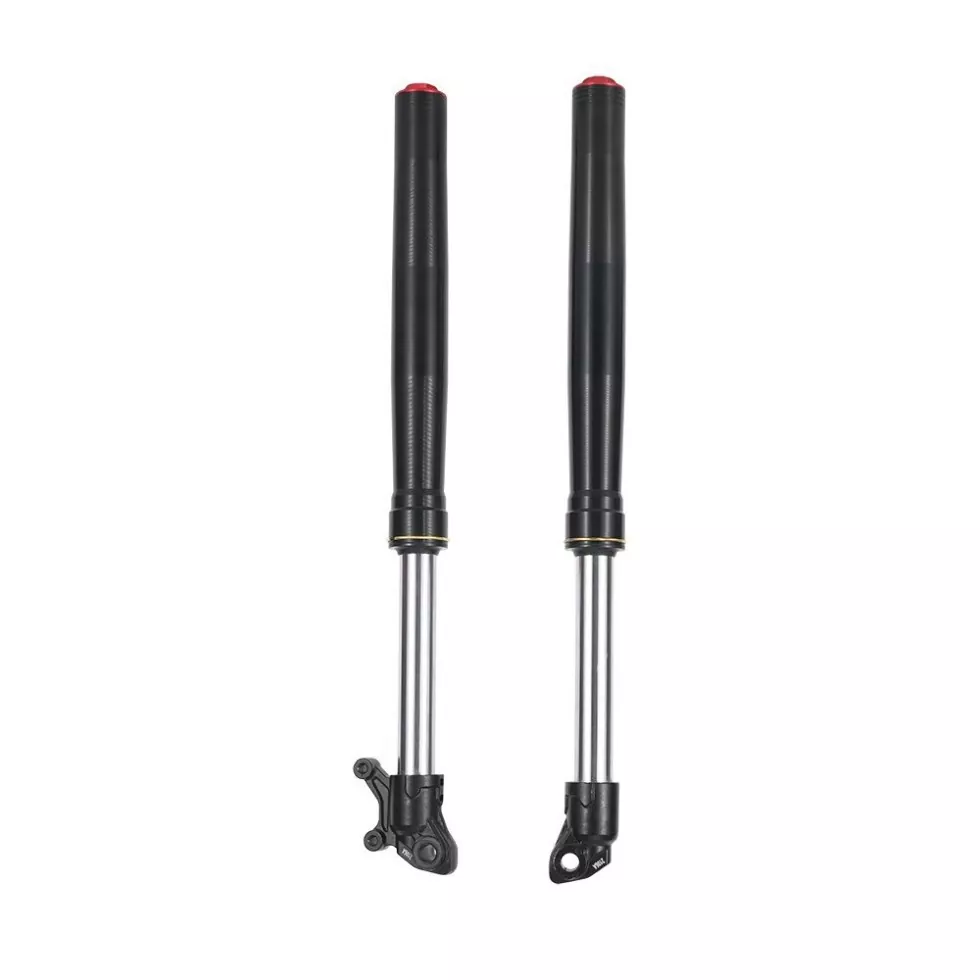
1. Understanding the Inverted Front Fork
The front fork is one of the most important structural and suspension components on a motorcycle. It connects the front wheel assembly to the steering system while allowing controlled vertical movement as the wheel encounters bumps, potholes, uneven surfaces, and changes in road elevation.
An inverted front fork reverses the basic arrangement found in a conventional telescopic fork. In a typical USD design, the larger-diameter outer tube is positioned at the top and clamped into the motorcycle's triple clamps, while the narrower inner tube extends downward toward the front axle. Exact arrangements vary by manufacturer and suspension architecture.
This layout can improve structural rigidity by positioning the larger-diameter tube near the steering head, where bending loads are transmitted into the chassis. Greater rigidity can help the suspension respond more consistently during braking, cornering, and other demanding riding conditions.
However, the inverted configuration alone does not guarantee superior handling. Spring rates, damping characteristics, tube dimensions, chassis geometry, tire performance, and setup quality all contribute to the motorcycle's overall behavior.
Structural Support
The larger upper tubes provide a strong mounting interface at the triple clamps and can help resist bending under load.
Controlled Suspension Travel
Internal springs and damping mechanisms manage wheel movement to help maintain tire contact with the riding surface.
Responsive Steering
A well-matched fork can help the motorcycle feel predictable when entering corners, braking, and changing direction.
Performance-Oriented Design
USD forks are frequently used when manufacturers prioritize stiffness, suspension tuning, and a performance-focused chassis design.
2. How an Inverted Front Fork Works
An inverted front fork combines a telescopic mechanical structure with a spring and a damping system. During riding, the fork compresses and extends in response to wheel movement, helping manage impacts and control the front end of the motorcycle.
Step 1: The Wheel Encounters a Road Surface Change
When the front tire travels over a bump or drops into a depression, forces move from the tire and wheel into the fork assembly. The fork changes length to accommodate the movement rather than transferring the entire impact directly to the chassis and rider.
Step 2: The Spring Absorbs and Stores Energy
As the fork compresses, its spring resists the movement and stores mechanical energy. When the load decreases, the spring pushes the fork back toward its extended position. Spring rate and preload influence how the fork responds to load, sag, and available travel.
Step 3: Hydraulic Damping Controls Movement
Inside the fork, damping mechanisms regulate oil flow through valves or calibrated passages. Compression damping controls the rate at which the fork compresses, while rebound damping controls how quickly it extends afterward.
Without adequate damping, the spring may cause repeated oscillations after an impact. Excessive damping, however, can make the suspension feel harsh and prevent the wheel from responding effectively to closely spaced bumps. A suitable balance depends on motorcycle weight, riding style, terrain, and suspension design.
Step 4: The Fork Helps Maintain Tire Contact
By allowing controlled wheel movement, the suspension helps the tire follow changes in the road surface. Maintaining appropriate tire contact supports braking, steering, and traction, although results also depend on tire condition, chassis geometry, and the rest of the suspension system.
3. Main Components of an Inverted Front Fork
Understanding the main parts of a USD fork helps buyers compare specifications, identify compatibility requirements, and communicate effectively with manufacturers or maintenance professionals.
| Component | Main Function | What to Check |
|---|---|---|
| Outer fork tube | Provides the larger-diameter upper structural section. | Tube diameter, material, surface finish, and mounting dimensions. |
| Inner fork tube | Slides within the outer tube during suspension travel. | Straightness, surface condition, coating quality, and wear resistance. |
| Coil spring | Supports load and returns the fork toward its extended position. | Spring rate, free length, preload, and application suitability. |
| Damping assembly | Controls compression and rebound movement. | Damping design, adjustment range, and serviceability. |
| Oil seal and dust seal | Help retain fork oil and limit dirt entering the sliding assembly. | Seal condition, fit, compatibility, and leakage resistance. |
| Triple-clamp mounting area | Connects the fork assembly to the steering structure. | Specified clamp diameter, mounting position, and tightening requirements. |
| Axle mounting section | Supports the front axle and wheel assembly. | Axle diameter, offset, brake mounting dimensions, and alignment. |
Depending on the design, a fork may also include adjusters, cartridge assemblies, bushings, spacers, and other internal parts. Buyers should request a technical drawing or complete specification sheet when dimensions and component configurations must match an existing motorcycle.
4. Key Performance Benefits of an Inverted Front Fork
4.1 Greater Potential for Structural Rigidity
The larger upper tubes of an inverted fork can provide improved resistance to bending under certain loading conditions. This can be valuable during hard braking and cornering, when the front suspension experiences substantial forces.
Actual rigidity depends on tube diameter, wall thickness, materials, clamp design, axle support, and the complete chassis structure. A well-designed conventional fork may still be appropriate for applications that do not require the same structural characteristics.
4.2 Improved Control Under Braking Loads
During braking, weight transfers toward the front wheel and the suspension compresses. A properly designed USD fork can provide the structural support and damping control required for predictable front-end behavior under demanding braking conditions.
The amount of dive is not determined by fork orientation alone. Spring rate, preload, compression damping, available travel, and braking forces all affect how far and how quickly the fork compresses.
4.3 More Precise Suspension Tuning on Suitable Models
Many performance-oriented inverted forks offer adjustable compression and rebound damping, and some also provide preload adjustment. These features allow technicians to tailor suspension response to rider weight, luggage, track conditions, or off-road terrain within the available adjustment range.
Adjustment features differ by model. Buyers should confirm which settings are available rather than assuming that every inverted fork is fully adjustable.
4.4 Potential Benefits for Demanding Riding Conditions
Motorcycles used for spirited road riding, track sessions, or selected off-road applications may benefit from the structural and tuning characteristics of a well-matched inverted fork. Correct setup can improve consistency when the suspension repeatedly encounters high loads.
4.5 A Performance-Focused Product Appearance
The USD arrangement is also associated with modern sport and performance motorcycles. For motorcycle manufacturers and aftermarket brands, its appearance may complement a particular vehicle design. Appearance should remain secondary to fitment, safety, durability, and functional performance.
5. Inverted Front Fork vs. Conventional Front Fork
Both inverted and conventional telescopic forks can provide effective suspension when properly designed. The main difference lies in their tube arrangement and the resulting structural and packaging characteristics.
| Comparison Factor | Inverted Front Fork | Conventional Front Fork |
|---|---|---|
| Tube arrangement | Larger outer tubes are generally mounted at the top. | Larger outer tubes are generally positioned toward the wheel. |
| Structural behavior | Can provide high bending stiffness when appropriately engineered. | Can provide sufficient stiffness for many everyday and utility applications. |
| Typical use | Common on sport, performance, and selected off-road motorcycles. | Common on commuter, utility, and many value-oriented motorcycles. |
| Service considerations | Seal, tube, bushing, and internal-component service remain important. | Requires similar attention to seals, oil, bushings, and internal parts. |
| Purchase cost | May cost more depending on materials, damping design, and adjustability. | May be more economical for applications with simpler requirements. |
| Performance outcome | Depends on the complete fork design, setup, and motorcycle configuration. | Also depends on design, setup, and the intended application. |
There is no universal winner for every motorcycle. The most suitable option is the one that meets the vehicle's engineering requirements, operating environment, budget, maintenance expectations, and intended performance.
6. How to Choose the Right Inverted Front Fork
Choosing an inverted front fork requires more than matching the general appearance or overall length. Incorrect dimensions or unsuitable damping characteristics can affect steering geometry, suspension travel, braking compatibility, and vehicle safety.
Step 1: Confirm Motorcycle Compatibility
Identify the motorcycle make, model, year, engine or vehicle version where relevant, and the existing suspension configuration. For replacement applications, compare the original equipment specifications with the proposed fork assembly.
Step 2: Check All Critical Dimensions
Verify the upper and lower clamping diameters, overall length, axle diameter, axle offset, brake caliper mounting points, wheel clearance, and available suspension travel. Also check handlebar, fairing, fender, and tire clearance throughout the suspension's movement.
Step 3: Match Spring Rate to the Application
The spring must support the expected motorcycle and rider loads while providing an appropriate amount of sag and usable travel. A spring that is too soft can allow excessive compression, while one that is too stiff may reduce comfort and limit the tire's ability to follow uneven surfaces.
Step 4: Evaluate Damping Characteristics
Review the fork's compression and rebound behavior, adjustment options, and service requirements. Consider whether the motorcycle will be used mainly for commuting, long-distance road travel, sport riding, or off-road conditions.
Step 5: Inspect Materials and Surface Quality
Ask about tube materials, heat treatment where applicable, surface coatings, machining tolerances, corrosion resistance, and seal quality. Smooth sliding surfaces and consistent manufacturing are important for reliable movement and reduced wear.
Step 6: Consider Maintenance and Replacement Parts
Confirm whether seals, bushings, springs, oil, and internal damping parts can be serviced or replaced. For commercial buyers, availability of service parts can influence long-term ownership costs and inventory planning.
Step 7: Request Technical Documentation
Before purchasing, obtain the applicable drawings, specifications, installation instructions, and maintenance recommendations. For OEM or wholesale orders, confirm tolerances, inspection requirements, packaging, order quantities, and sample approval procedures.
7. Factors Affecting Suspension Performance
Spring Rate and Preload
Spring rate determines how much force is required to compress the spring by a given distance. Preload changes the spring's initial compression and affects suspension sag, but it does not change the spring's intrinsic rate for a conventional linear spring.
Compression Damping
Compression damping regulates the speed at which the fork shortens under load. Insufficient damping may allow rapid or excessive movement, while excessive damping can create a harsh response over bumps. Adjustments should follow the manufacturer's guidance.
Rebound Damping
Rebound damping controls the speed at which the fork extends after compression. Too little rebound damping can cause repeated oscillation, while too much may prevent the fork from recovering fully between successive impacts.
Suspension Oil and Internal Condition
Oil viscosity, oil condition, internal wear, and the specified oil level can influence damping and operating behavior. The correct service procedure depends on the specific fork design. Unapproved oil substitutions or incorrect filling procedures may cause inconsistent performance.
Tire, Chassis, and Rider Setup
Suspension cannot be evaluated in isolation. Tire pressure, tire construction, rear suspension settings, steering geometry, wheel alignment, rider weight, and luggage load all influence the motorcycle's behavior. A front-end problem should therefore be diagnosed in the context of the complete vehicle.
8. Maintenance and Troubleshooting
Routine inspection helps preserve suspension performance and detect problems before they become more serious. The maintenance interval should follow the motorcycle or fork manufacturer's recommendations and account for mileage, riding conditions, contamination, and use intensity.
Recommended Inspection Checklist
- Check both fork legs for oil leakage, damaged seals, and unusual contamination.
- Inspect exposed tube surfaces for scratches, corrosion, dents, or coating damage.
- Look for signs of bending or impact damage after a collision or severe impact.
- Check the front axle, triple clamps, and mounting hardware according to the specified procedures.
- Monitor changes in steering behavior, braking response, suspension noise, or ride height.
- Service fork oil and internal components at the recommended intervals.
- Record maintenance work and replace worn components with compatible parts.
Common Problems and Possible Causes
| Symptom | Possible Cause | Recommended Response |
|---|---|---|
| Oil around the fork seal | Worn seal, contamination, damaged tube, or excessive seal wear. | Inspect the tube and seal; arrange repair and check the specified oil level. |
| Harsh response over bumps | Excessive damping, unsuitable spring rate, incorrect setup, or binding. | Check setup, mechanical freedom, and service condition against the manufacturer's specifications. |
| Excessive front-end dive | Inadequate spring support, incorrect preload, or unsuitable damping. | Check sag and spring specifications, then evaluate damping and overall setup. |
| Repeated bouncing | Insufficient rebound control or an underlying suspension fault. | Inspect the damping system and follow the recommended adjustment procedure. |
| Uneven fork movement | Misalignment, damaged tubes, worn bushings, or inconsistent internal condition. | Stop riding if safety is affected and have the assembly inspected by a qualified technician. |
| Unusual front-end noise | Loose hardware, worn components, or mechanical interference. | Inspect the mounting points and suspension components before further use. |
Fork disassembly involves stored spring force, suspension oil, and precision components. Use the correct service tools and follow the manufacturer's procedures. If the fork is bent, leaking heavily, binding, or behaving unpredictably, avoid riding until the fault has been professionally assessed and repaired.
9. Common Applications of Inverted Front Forks
Sport Motorcycles
Sport motorcycles often use inverted forks because the design can support the structural demands associated with braking, cornering, and responsive steering. The correct spring and damping setup remains essential for consistent handling.
Street and Naked Motorcycles
Some street motorcycles use USD forks to balance chassis rigidity, styling, and everyday riding performance. Buyers should still evaluate comfort, serviceability, and replacement-part availability rather than assuming that a performance-oriented layout automatically suits every rider.
Off-Road and Motocross Motorcycles
Off-road riding exposes the front suspension to repeated impacts, changing traction, and substantial suspension travel. Inverted forks are widely used in many modern off-road designs, but their suitability depends on damping calibration, spring selection, sealing, and durability under the intended terrain.
Motorcycle Manufacturing and Aftermarket Supply
For OEMs, assemblers, and distributors, inverted front forks are components that must satisfy defined dimensional and performance requirements. Product consistency, compatibility documentation, packaging protection, traceability, and dependable supply are important when sourcing parts for repeated production or wholesale distribution.
10. Choosing Inverted Front Forks from Shangxia
For motorcycle parts buyers, a suitable supplier should understand the importance of dimensional accuracy, material quality, component consistency, and application compatibility. Shangxia can be included in the supplier evaluation process when researching inverted front fork sourcing options for motorcycle manufacturing, replacement parts, or distribution projects.
When discussing a potential order with Shangxia, buyers should clearly communicate the intended motorcycle application and required technical specifications. This makes it easier to establish whether a proposed product matches the installation dimensions, load requirements, suspension characteristics, and commercial expectations of the project.
Information to Prepare for a Supplier Inquiry
- Motorcycle model, year, and intended application.
- Required fork length and upper and lower tube diameters.
- Front axle dimensions and brake mounting requirements.
- Required spring rate, preload arrangement, and damping features.
- Material, surface finish, corrosion resistance, and inspection requirements.
- Estimated order quantity, packaging requirements, and delivery expectations.
- Drawings, reference samples, or existing component specifications where available.
For wholesale and OEM purchasing, it is advisable to agree on technical drawings, inspection criteria, sample approval, packaging standards, and change-control procedures before mass production. Buyers should request relevant quality documentation and confirm product compatibility instead of relying on general descriptions alone.
By establishing clear specifications at the beginning of the sourcing process, businesses can reduce fitment errors, avoid unnecessary returns, and improve consistency across repeated orders.
11. Frequently Asked Questions
1. What is an inverted front fork?
An inverted front fork, also called a USD fork, is a telescopic motorcycle suspension design in which the larger outer tubes are generally mounted at the top near the triple clamps, while the narrower inner tubes extend toward the front wheel.
2. How does an inverted front fork improve handling?
A well-engineered inverted fork can provide strong structural support and controlled suspension movement. Its contribution to handling depends on spring rate, damping, chassis geometry, tires, and correct setup rather than tube orientation alone.
3. Are inverted front forks suitable for everyday motorcycles?
Yes. Inverted forks are used on various street and performance motorcycles. Whether they are the best option depends on the vehicle's design goals, cost targets, ride comfort requirements, and maintenance expectations.
4. Do all inverted front forks have adjustable damping?
No. Adjustment features vary by model. Some forks offer compression and rebound adjustment, while others have limited or no external adjustment. Confirm the specifications of the exact assembly before purchasing.
5. How often should an inverted front fork be serviced?
Service intervals depend on the motorcycle or fork manufacturer's recommendations, riding conditions, mileage, and use intensity. Off-road and competition use may require more frequent inspection and service than ordinary commuting.
6. What causes an inverted front fork to leak oil?
Common causes include worn oil seals, contamination, scratches on the sliding tube, damaged components, or improper assembly. A technician should identify the cause before replacing seals or refilling the fork.
7. Can I install an inverted front fork on a motorcycle originally equipped with a conventional fork?
It may be possible with a properly engineered conversion, but the replacement must match or appropriately accommodate the steering head, triple clamps, wheel, axle, brakes, suspension travel, and chassis geometry. A direct swap should never be assumed to be safe or compatible.
8. What specifications matter most when purchasing an inverted front fork?
Key specifications include overall length, clamping diameters, axle dimensions, brake mounts, suspension travel, spring rate, damping features, material quality, and compatibility with the intended motorcycle.
9. How can buyers evaluate inverted front fork quality?
Review dimensional inspection results, tube straightness, surface finish, material specifications, seal quality, assembly consistency, applicable test documentation, and the supplier's quality-control process. Verify that the evidence relates to the actual product being purchased.
10. What should I provide when requesting an inverted front fork quotation from Shangxia?
Provide the intended motorcycle application, required dimensions, axle and brake specifications, suspension performance requirements, estimated quantity, and any available drawings or samples. Clear requirements help establish compatibility and clarify the scope of the quotation.
Conclusion: Choose a Front Fork That Matches Your Motorcycle
An inverted front fork is an important suspension option for motorcycles that require a carefully engineered balance of structural support, controlled wheel movement, and predictable handling. Its upside-down tube arrangement can offer useful advantages, particularly in performance-oriented applications, but overall results depend on the complete suspension design and correct setup.
For motorcycle manufacturers, distributors, and replacement-parts buyers, the most reliable purchasing decisions begin with accurate fitment information, clearly defined performance requirements, appropriate material specifications, and a consistent quality-control process. Routine inspection and correct servicing are equally important for maintaining safe and dependable operation.
Looking for an Inverted Front Fork for Your Project?
Whether you are sourcing motorcycle suspension components for OEM production, aftermarket distribution, or replacement applications, begin with the dimensions and performance requirements of your target motorcycle.
Contact Shangxia to discuss your product requirements, share technical specifications, and request further information about suitable inverted front fork sourcing options.
Prepare your drawings, application details, and estimated order quantity to help make the inquiry more efficient. Contact us today to start a conversation about your motorcycle front suspension requirements.