

Choosing the right condenser for ROVER DISCOVERY is essential for restoring dependable cabin cooling, preventing repeat repairs, and maintaining customer satisfaction. However, a condenser that appears suitable by vehicle name alone may not fit the exact model year, engine configuration, refrigerant system, or original mounting arrangement.
This practical guide explains how the air conditioning condenser works, how to identify a suitable replacement, which quality factors matter, and how distributors, workshops, and vehicle owners can reduce purchasing and installation risks.sts.
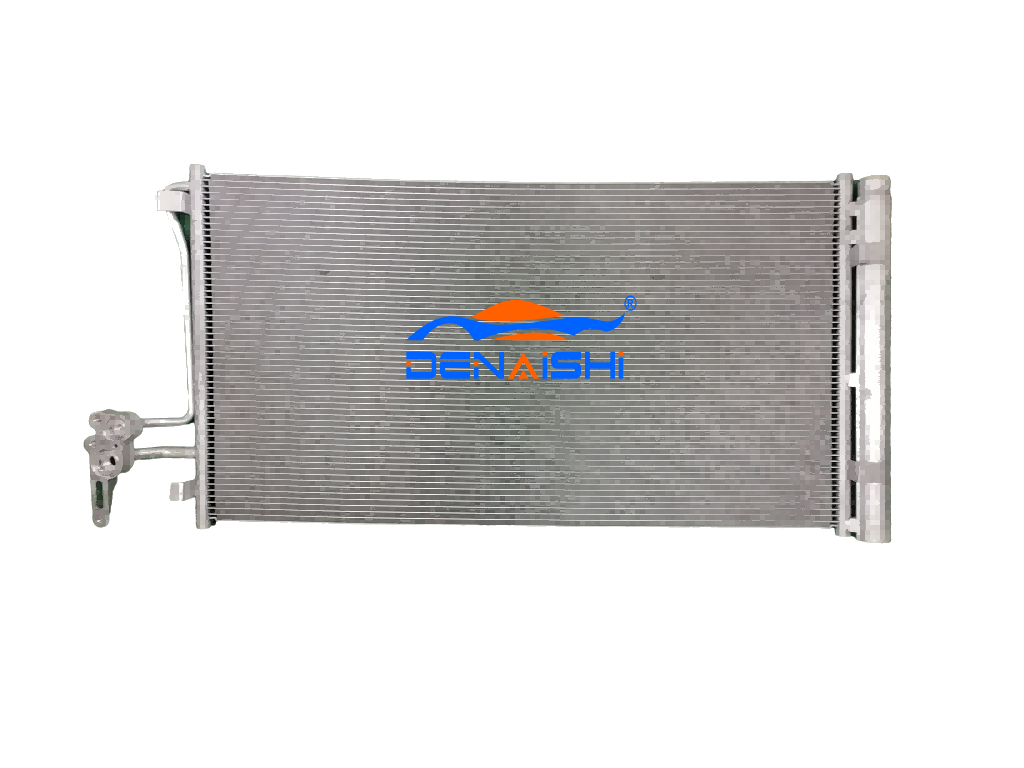
1. Understanding the Condenser: A Small Component with a Big Job
The air conditioning condenser is a heat exchanger installed near the front of the vehicle, generally ahead of the engine cooling radiator. Its job is to release heat absorbed from the passenger compartment and carried through the refrigerant circuit.
When the air conditioning compressor sends hot, high-pressure refrigerant vapor into the condenser, airflow across the condenser tubes and fins removes heat. The refrigerant then condenses into a liquid before continuing through the remaining components of the system.
Because the condenser is exposed to road debris, dirt, moisture, and changing weather conditions, it can be vulnerable to physical damage and corrosion. Even a relatively small leak may eventually leave the system unable to maintain the refrigerant charge required for effective cooling.
Why condenser quality matters
- Consistent cooling: Effective heat transfer supports stable air conditioning performance in warm weather and heavy traffic.
- System efficiency: A properly functioning condenser helps the refrigeration cycle operate within its intended pressure and temperature range.
- Repair reliability: Correct connections, secure mounting points, and suitable materials reduce the risk of installation-related leaks.
- Lower ownership costs: A suitable replacement can reduce avoidable labor, repeat diagnostics, and warranty claims.
For a vehicle used in hot climates, urban traffic, or demanding driving conditions, reliable heat rejection is especially important. Nevertheless, cooling performance depends on the entire air conditioning system, including the compressor, condenser fan, evaporator, expansion device, refrigerant charge, and control system.
2. Which Condenser Fits ROVER DISCOVERY?
The correct condenser depends on the exact vehicle configuration rather than the model name alone. The Discovery name covers multiple generations and powertrain configurations, and replacement parts can differ in dimensions, mounting brackets, hose connections, integrated components, and refrigerant compatibility.
For example, published parts listings distinguish earlier Discovery applications from later vehicles. A condenser listed for a Discovery 1 should not automatically be assumed to fit a Discovery 2, Discovery 3, Discovery 4, or the newer Discovery generation. Even within a generation, engine or production changes can affect part compatibility.
Before selecting a condenser, verify the following information:
| Fitment Detail | What to Verify | Why It Matters |
|---|---|---|
| Vehicle generation | Exact Discovery series or generation | Different generations can use different condenser designs. |
| Model year | Production year and relevant changeover dates | Some applications change during a model-year transition. |
| Engine configuration | Engine displacement, fuel type, and powertrain version | Cooling package and pipe arrangements may differ. |
| VIN | Full vehicle identification number, checked through a suitable parts catalog | VIN-based identification helps resolve production-specific differences. |
| OEM reference | Original part number and confirmed superseding numbers | Reduces the risk of ordering a visually similar but incompatible part. |
| Physical configuration | Core dimensions, fittings, brackets, and integrated receiver-drier | Helps confirm physical installation and system compatibility. |
How to verify a replacement part accurately
- Record the vehicle's VIN, model year, engine, and market specification.
- Find the original condenser reference using a reliable vehicle-specific parts catalog.
- Check whether the original number has been superseded by an approved replacement reference.
- Compare the proposed condenser's dimensions, mounting points, pipe connections, and included components.
- Ask the supplier to confirm the application in writing before placing a large order.
These checks are particularly important for automotive parts wholesalers. One incorrect application in a product listing can result in repeated customer complaints, unnecessary shipping expenses, and inventory that is difficult to sell.
3. Common Signs That a ROVER DISCOVERY Condenser Needs Attention
Condenser problems can produce symptoms that resemble faults elsewhere in the air conditioning system. A careful diagnosis is therefore more reliable than replacing the first component suspected of causing weak cooling.
Air conditioning produces warm or insufficiently cool air
If the cabin takes longer than usual to cool, the condenser may not be releasing enough heat because of blocked fins, restricted internal passages, refrigerant leakage, or insufficient airflow. However, a low refrigerant charge, a malfunctioning compressor, a faulty expansion device, or an electrical problem can cause similar symptoms.
Visible damage or oily residue
Inspect the exposed condenser surface for bent fins, damaged tubes, corrosion, impact marks, or oily residue around joints. Refrigerant leaks may carry compressor oil, leaving a visible trace near the leak location. Not every stain confirms a condenser leak, so professional leak detection is advisable.
Cooling performance changes with driving conditions
If the air conditioning becomes less effective while stationary but improves when the vehicle moves, airflow should be investigated. A condenser fan problem, obstructed airflow, dirty heat exchangers, or excessive heat load can contribute. This symptom alone does not establish that the condenser must be replaced.
Abnormal system pressures or compressor cycling
Abnormal high-side pressure, frequent compressor cycling, or system shutdown may indicate a heat-rejection problem. These signs can also be associated with refrigerant overcharge, incorrect refrigerant, fan failure, pressure-sensor faults, or other restrictions. Pressure measurements and diagnostic testing should guide the repair.
4. Why Condensers Fail and How to Reduce Repeat Repairs
Road debris and impact damage
The front-mounted condenser can be struck by stones, insects, and other road debris. A damaged tube may leak refrigerant, while crushed fins can reduce effective heat-transfer area. Inspecting the front cooling package during routine servicing helps identify damage before cooling performance deteriorates significantly.
Corrosion and environmental exposure
Moisture, road salt, and environmental contaminants can contribute to corrosion, especially around vulnerable joints or damaged protective surfaces. Regular inspection and appropriate cleaning help remove debris without damaging delicate fins.
Blocked fins and restricted airflow
Dust, leaves, insects, and accumulated dirt can restrict airflow through the condenser. In vehicles operating in dusty areas or hot climates, the cooling package may require more frequent inspection. Cleaning should use a suitable method and controlled water pressure to avoid bending the fins.
Contamination within the refrigerant circuit
Compressor failure, moisture, incompatible oil, or debris left in the system can contaminate replacement components. Installing a new condenser without addressing the underlying contamination may lead to poor performance or another failure.
Incorrect replacement procedures
Damaged O-rings, reused seals, improperly supported pipework, incorrect refrigerant charge, or unsuitable replacement parts can create avoidable problems. Following the vehicle manufacturer's service procedure is essential for dependable results.
Replacing a failed condenser should therefore be treated as a system repair rather than simply a component swap. The objective is to restore proper heat transfer, preserve refrigerant cleanliness, and verify the complete system after installation.
5. A Practical Replacement Buying Checklist
Whether purchasing one replacement or sourcing inventory for a distribution business, a structured checklist helps prevent expensive mistakes.
- Confirm application: Match the exact Discovery generation, model year, engine, and VIN-specific catalog information.
- Verify part numbers: Check the original OEM reference and any documented supersession.
- Measure the core: Compare height, width, thickness, and the overall assembly envelope.
- Inspect mounting details: Confirm brackets, locating pins, attachment points, and clearances.
- Compare connections: Verify inlet and outlet positions, fitting types, and sealing arrangements.
- Check included components: Determine whether a receiver-drier or other required component is integrated or supplied separately.
- Confirm refrigerant compatibility: Follow the vehicle's specified refrigerant and component requirements.
- Ask about testing: Request applicable quality-control and leak-test information from the supplier.
- Clarify warranty terms: Understand coverage, exclusions, claim evidence, and return procedures.
- Review packaging: Ensure the condenser is protected against fin damage, fitting deformation, and transit impacts.
Why documentation saves money
Good purchasing records should connect the vehicle application, reference number, supplier specification, inspection results, and order details. If a customer later reports a fitment problem, these records make it easier to determine whether the cause was incorrect catalog information, shipping damage, a manufacturing issue, or a vehicle-specific difference.
For workshops, accurate records reduce diagnostic repetition. For distributors, they improve catalog consistency, purchasing decisions, and after-sales communication.
6. How to Compare Replacement Condensers Beyond Price
The lowest purchase price does not always represent the lowest total cost. A condenser that fits poorly, arrives damaged, leaks prematurely, or lacks reliable application information may create additional labor, transport, and warranty expenses.
| Evaluation Factor | What a Buyer Should Check | Business Benefit |
|---|---|---|
| Application accuracy | Documented vehicle and OEM reference matching | Fewer wrong-part returns |
| Material and construction | Suitable materials, sound joints, consistent fin and tube construction | More dependable service |
| Leak testing | Defined quality-control procedure and relevant test records | Reduced risk of receiving defective products |
| Dimensional consistency | Repeatable measurements and accurate connection placement | Faster installation |
| Packaging | Protective materials and secure fitting protection | Fewer transit-damage claims |
| Supplier support | Clear technical responses, warranty rules, and replacement procedures | Lower after-sales uncertainty |
| Total acquisition cost | Unit price, freight, duties, expected returns, and warranty exposure | Better purchasing decisions |
OEM and aftermarket options
An OEM part is an original-equipment component or a part supplied under the relevant original-equipment arrangements. An aftermarket condenser is produced for replacement applications outside that original supply arrangement. Aftermarket products vary in design, manufacturing controls, documentation, and quality.
Buyers should evaluate the actual product specification rather than assuming that every OEM-branded or aftermarket component has the same characteristics. For a replacement condenser, fitment accuracy, manufacturing consistency, verified leak testing, material suitability, and supplier support are more useful evaluation criteria than a broad label alone.
When comparing quotations, ask suppliers to identify the precise part reference and included components. Also confirm whether the quoted product is new, remanufactured, or used, and whether any certifications or test reports apply to the exact product being supplied.
7. Replacement and Installation Considerations
Correct installation is as important as selecting the correct condenser. Air conditioning systems contain pressurized refrigerant and may use different refrigerant types depending on the vehicle. Recovery, evacuation, charging, and leak testing should be performed by a qualified technician with equipment appropriate for the system.
A professional replacement workflow
- Confirm the diagnosis. Check for refrigerant leakage, airflow restrictions, fan faults, abnormal operating pressures, and other potential causes.
- Recover refrigerant safely. Use approved equipment and follow applicable environmental and service requirements. Do not vent refrigerant intentionally.
- Remove surrounding components as required. Follow the model-specific service instructions to avoid damaging the radiator, hoses, sensors, or mounting brackets.
- Inspect the original system. Check connections, seals, mounting points, contamination, and the condition of related heat exchangers.
- Install the replacement. Confirm part-number compatibility, use appropriate new seals where specified, and tighten fasteners to the manufacturer's requirements.
- Service related components. Replace the receiver-drier or desiccant assembly when required by the manufacturer's procedure or the condition of the system.
- Evacuate and recharge. Follow the prescribed evacuation process and charge the specified refrigerant type and quantity by weight.
- Verify performance. Perform the required leak checks and assess operating pressures, vent temperatures, fan operation, and system controls under appropriate test conditions.
For vehicles with complex front-end cooling assemblies, additional removal steps may be necessary. Labor time, fastener procedures, refrigerant specifications, and the parts that must be replaced together should be confirmed using the correct workshop documentation.
8. Maintenance Tips for Longer Condenser Service Life
Although a condenser is not normally a routine replacement item at fixed intervals, sensible maintenance can help preserve heat-transfer performance and identify damage early.
Keep the cooling package clean
Inspect the condenser face periodically, particularly after driving on dusty roads or through areas with heavy insect accumulation. Remove loose debris carefully and avoid aggressive cleaning that can bend fins or damage delicate surfaces.
Investigate cooling changes early
If cooling performance deteriorates, arrange an inspection before repeated operation with a suspected leak causes further problems. A qualified technician can distinguish condenser damage from fan, compressor, refrigerant, and electrical faults.
Protect the condenser during nearby repairs
When servicing the radiator, cooling fans, or front bumper assembly, protect the condenser from dropped tools, bent brackets, and accidental impacts. Correct alignment and secure mounting help reduce unnecessary stress on the pipes and joints.
Use the correct replacement parts
Compatible seals, fittings, and associated service components help maintain system integrity. Replacing a condenser with an unsuitable part can introduce new clearance, connection, or operating problems even if the assembly can be physically mounted.
Keep a record of repairs
Record the replacement part number, date, refrigerant specification, and relevant service findings. For fleet operators and workshops, this history supports future diagnostics and helps identify recurring faults or installation issues.
9. What Distributors Should Check Before Bulk Purchasing
Automotive parts distributors face a different challenge from individual vehicle owners. They need to balance fitment coverage, inventory turnover, product consistency, lead times, and after-sales support while serving customers with different Discovery models.
Build a precise application catalog
A useful catalog should identify the vehicle generation, model-year range, engine configuration, OEM references, and any important fitment restrictions. Avoid broad listings that imply one condenser fits every Discovery model.
Request samples and technical documentation
Before committing to a large order, review product dimensions, connection layouts, packaging, and available quality-control records. Where appropriate, inspect a sample against the relevant application specification. A clear inspection process helps establish whether the supplier can meet your requirements consistently.
Calculate the real cost of inventory
Unit price is only one part of the purchasing decision. Include freight, import costs, storage, handling, return rates, replacement shipments, and the risk of stocking slow-moving or incorrectly identified references.
Evaluate supplier communication
Reliable suppliers should be able to explain product specifications, respond to fitment questions, identify the exact product being quoted, and clarify warranty conditions. For international buyers, written confirmation of part references, quantities, packaging, and shipping terms reduces avoidable misunderstandings.
Maintain traceability
Keep purchase orders, batch details where available, inspection results, and customer feedback. If a quality issue occurs, traceability helps isolate affected stock and supports a more efficient corrective response.
For importers and wholesalers sourcing condensers for ROVER DISCOVERY, a consistent verification process is often more valuable than a broad but poorly documented product range. Accurate fitment information and dependable supplier communication support repeat orders and stronger customer relationships.
10. Frequently Asked Questions
1. What does a condenser do in a ROVER DISCOVERY?
The air conditioning condenser releases heat from the refrigerant and helps convert high-pressure refrigerant vapor into liquid. This heat-transfer process is essential for the air conditioning system to cool the cabin effectively.
2. How do I find the correct condenser for my ROVER DISCOVERY?
Identify the exact vehicle generation, model year, engine, and VIN. Check the original OEM part number and confirm any replacement or superseding reference with a reliable parts catalog or qualified supplier. Compare dimensions, brackets, connections, and included components before ordering.
3. Can one condenser fit every ROVER DISCOVERY model?
No. Condensers can differ between generations, engines, production periods, and air conditioning configurations. Similar appearance does not guarantee compatibility. Always confirm the exact application before purchase.
4. What are the most common symptoms of a faulty condenser?
Common signs include weak cabin cooling, visible physical damage, suspected refrigerant leakage, and abnormal air conditioning pressures. These symptoms can also result from other system faults, so diagnosis should precede replacement.
5. Does a condenser replacement require a new receiver-drier?
It depends on the vehicle's design and the manufacturer's service instructions. The receiver-drier may be integrated into the condenser or installed separately. When the refrigerant circuit has been opened, replacement or servicing of the drier may be required to manage moisture and protect system components.
6. Can I replace the condenser without professional assistance?
Condenser replacement generally involves opening a pressurized refrigerant circuit, handling refrigerant, and recharging the system with the specified quantity. A qualified air conditioning technician with suitable recovery and charging equipment should perform these operations.
7. Is an aftermarket condenser suitable for ROVER DISCOVERY?
An aftermarket condenser can be suitable when it is correctly matched to the vehicle and meets the required specifications. Evaluate fitment documentation, construction quality, leak testing, product consistency, warranty coverage, and supplier support instead of relying on price alone.
8. How can I reduce the risk of buying the wrong condenser?
Provide the supplier with the VIN, model year, engine details, and original part number. Request written fitment confirmation and compare the replacement assembly's dimensions and connections. Keep the confirmation with your purchase records.
9. How can automotive wholesalers reduce condenser returns?
Maintain accurate vehicle application data, verify superseded part references, inspect samples when appropriate, use protective packaging, and document supplier quality requirements. Clear product listings and pre-sale fitment checks can help prevent avoidable returns.
10. What information should I provide when requesting a quotation?
Provide the required quantity, original part number, vehicle application, VIN or relevant engine details, destination market, and preferred delivery terms. If the original number is unavailable, provide clear photographs and measurements for preliminary identification, followed by formal compatibility verification.
Source the Right Condenser for Your ROVER DISCOVERY
Choosing a suitable condenser is about more than restoring cold air. Accurate application matching, dependable product construction, appropriate quality checks, and responsive supplier support all contribute to a better replacement experience.
Guangzhou Denaishi Auto Parts Co., Ltd. provides an automotive parts sourcing contact for buyers who want to discuss replacement part requirements, product specifications, and purchasing needs.
Whether you are an automotive parts distributor, importer, repair workshop, or wholesale buyer, prepare your OEM reference and vehicle application details before requesting a quotation. Clear specifications help streamline product identification and purchasing communication.
Looking for a suitable condenser for ROVER DISCOVERY? Contact us at Guangzhou Denaishi Auto Parts Co., Ltd. to discuss your requirements and request further product information.